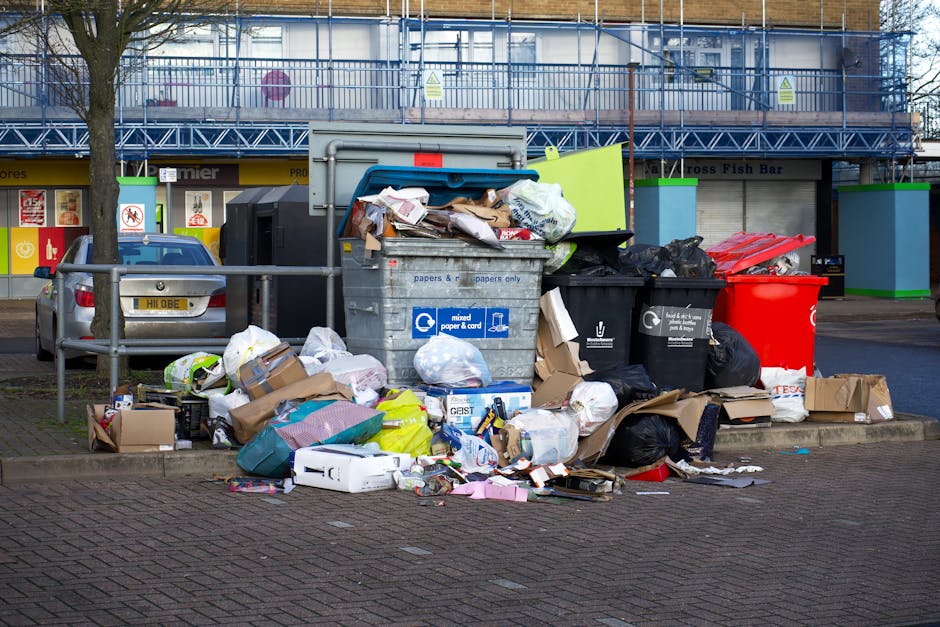
Feltham rubbish removal guide for TW13 homes
If you live in TW13, rubbish has a way of building up faster than you expect. One weekend it is a broken wardrobe, a couple of black bags and some old garden cuttings; the next, you are staring at a hallway that feels smaller than it should. This Feltham rubbish removal guide for TW13 homes is here to make the whole process feel less messy, less rushed and a lot more manageable.
Whether you are clearing a flat, sorting a loft, emptying a garage or dealing with leftover bits after renovation work, the right approach saves time, reduces stress and helps you avoid costly mistakes. It also helps you choose between a full clearance service, specialist removal or a more DIY-style option. Let's face it, nobody wants to spend a Saturday loading a car with damp cardboard if there is a smarter way.
In the sections below, you will find a practical breakdown of how rubbish removal usually works in Feltham, what to check before booking, what to avoid, and how to make sure your waste is handled properly. You will also see when services such as waste removal, house clearance or flat clearance may be a better fit than a general tidy-up.
- Quick local takeaway: TW13 homes often need flexible access, careful lifting and a plan for bulky or awkward items.
- Best outcome: sort items first, separate recyclables, and book the right service for the volume and type of waste.
- Most common mistake: assuming everything can go out together without checking restrictions or handling needs.
Expert summary: The easiest rubbish removal jobs are the ones planned before the first bag is lifted. A little sorting up front usually means quicker clearance, fewer surprises and a cleaner final result.
Table of Contents
- Why Feltham rubbish removal guide for TW13 homes matters
- How Feltham rubbish removal guide for TW13 homes works
- Key benefits and practical advantages
- Who this is for and when it makes sense
- Step-by-step guidance
- Expert tips for better results
- Common mistakes to avoid
- Tools, resources and recommendations
- Law, compliance, standards and best practice
- Options, methods, and comparison table
- Case study or real-world example
- Practical checklist
- Conclusion
- Frequently asked questions
Why Feltham rubbish removal guide for TW13 homes Matters
TW13 includes a mix of homes, from compact flats and terraced properties to larger family houses with lofts, sheds and garages that quietly fill up over time. That variety matters because rubbish removal is never quite one-size-fits-all. What works for a small bag collection in one home may be hopeless for a builder's rubble pile, a fridge, or several bulky furniture items.
It also matters because waste has practical consequences. Left too long, it blocks storage, creates trip hazards and can even affect the way a room feels. You know the sort of thing: the spare room becomes a dumping ground, then the spare room stops being a room at all. Before you know it, the whole house starts to feel cluttered and oddly tiring.
For many Feltham households, the real issue is not just disposal. It is deciding what can be reused, what should be recycled, what needs special handling and what should be lifted out carefully to protect walls, floors and stairwells. A useful guide gives you a calmer route through that process.
It also helps you avoid the classic "we'll sort it later" problem. To be fair, that approach sounds harmless until a deadline arrives, a landlord inspection is looming, or the weather turns and the garden waste starts smelling. Then the job becomes a lot less charming.
If you are comparing services, the broader home clearance route is often helpful when several areas need clearing at once, while garage clearance is better when the issue is a space packed with mixed household items, tools and forgotten boxes.
How Feltham rubbish removal guide for TW13 homes Works
In simple terms, rubbish removal starts with identifying what needs to go, then matching that waste to the right collection method. The process can be surprisingly straightforward when the load is already sorted. When it is not, the job usually takes longer and may need more than one type of service.
Most home clearances follow a similar pattern:
- Assess the waste: bulky furniture, bags of mixed rubbish, garden cuttings, appliances, construction debris or a mix of all four.
- Check access: think about stairs, shared entrances, parking, tight hallways and whether items need to come through a narrow side gate.
- Separate special items: fridges, mattresses, confidential paperwork, and anything hazardous should be flagged early.
- Choose the right clearance type: general waste removal, furniture disposal, garden clearance or a full property clearance.
- Arrange collection: agree on timing, access, likely load size and any items that need extra care.
- Complete the removal: load items safely, clear the area, and leave the space tidy.
That sounds basic, but the planning stage is where most of the value sits. In a typical TW13 terrace, for example, a few large pieces can be harder to remove than a bigger pile of lighter items because stairs, corners and door frames become the real challenge. It is one of those things people only notice once they start dragging the first heavy item halfway to the front door.
For mixed household waste, a general waste removal service may be enough. For awkward bulky items, the more targeted options such as furniture disposal or mattress and sofa disposal can save time and reduce handling risk.
Key Benefits and Practical Advantages
A well-run rubbish removal service does more than make things look neat. It gives you breathing space. That may sound a bit dramatic, but if you have ever tried to live around a pile of waste for two weeks, you will know what I mean. The room feels different once the clutter goes.
Here are the benefits that matter most for TW13 homes:
- Faster reclaiming of space: a cleared room can become usable again the same day.
- Less lifting and strain: especially useful for heavy furniture, appliances and awkward items.
- Cleaner presentation: ideal before moving out, selling, letting or doing home improvements.
- Better sorting and recycling: separate waste streams are easier to handle properly.
- Lower stress: someone else deals with loading, transport and disposal logistics.
- More flexibility: useful when access is tight or the job needs to be done quickly.
Another practical advantage is that the right service can match the job to the material. For instance, a loft clearance is usually different from a garden tidy-up because access is tighter and there are often more delicate items, while builders waste clearance is a better fit for rubble, timber and renovation leftovers.
That distinction matters. If you choose the wrong method, you may pay for capacity you do not need, or worse, find yourself with a collection that cannot take certain items. Nobody needs that kind of back-and-forth on a busy weekday morning.
Who This Is For and When It Makes Sense
This guide is useful for a wide range of TW13 households, not just people doing a full house clear. In fact, many rubbish removal jobs start as "just a few things" and quietly turn into a bigger project. You clear one cupboard, then another, then the garage door starts looking at you accusingly.
It makes sense if you are:
- moving home and need to strip out unwanted items quickly
- clearing a rented property before inspection or handover
- dealing with post-renovation mess or leftover materials
- sorting a loft, shed, garage or spare room that has become overloaded
- replacing furniture and need old items removed
- tidying a garden after a seasonal cutback or landscaping project
- managing a family property where the contents need careful sorting
If your waste is mostly household clutter, a house clearance or home clearance may be the most efficient route. If it is mainly old seating, beds or cabinets, then a more focused service like furniture clearance often makes the booking simpler.
And if you are living in a flat or maisonette, access and stairwell protection become more important. In those cases, a specialist flat clearance is often the sensible choice because it takes the realities of shared entrances and limited lift access into account.
Step-by-Step Guidance
Here is a practical way to handle rubbish removal in TW13 without making it a bigger job than it needs to be.
- Walk through every space. Look at the whole property before moving anything. A quick scan often reveals items in places you forgot about: under beds, behind wardrobes, up in the loft, or tucked behind the freezer.
- Sort by category. Separate general rubbish, reusable items, furniture, garden waste, electrical items and anything that looks hazardous or unusual.
- Identify bulky items early. Sofas, mattresses, wardrobes and appliances need different handling from bagged waste.
- Check access points. Measure if needed. A few centimetres really can matter when moving large furniture through a narrow stairwell.
- Set aside special waste. Fridges, freezers and similar appliances may require specialist handling, while confidential paperwork should be treated separately.
- Book the right service. Match the service to the waste rather than the other way round.
- Prepare the space. Move fragile items, clear pathways and make sure the route to the exit is safe.
- Confirm collection details. Timing, parking, access and any unusual instructions should be agreed in advance.
- Do a final sweep. Check cupboards, sheds and under-stairs storage before the team leaves.
If you are dealing with outdoor waste, a garden clearance service can be helpful for branches, hedge cuttings and soil-covered debris. For mixed objects that need careful handling and a proper sort, waste removal remains the broadest option.
A small but useful tip: keep one "unsure" pile separate. That way you do not have to keep changing your mind while everything else is being loaded. It sounds tiny, but it saves a surprising amount of faff.
Expert Tips for Better Results
Over the years, the best rubbish removal jobs have usually shared one thing in common: someone took ten minutes to prepare properly. That is all. Not perfection. Just enough planning to stop avoidable mistakes.
- Use clear labels. A simple marker on bags or boxes helps if several rooms are being cleared at once.
- Keep the heavy items together. This helps with lifting and load planning.
- Pull out recyclable material early. Cardboard, metal and clean wood are often easier to process when separated.
- Take photos before booking if needed. Useful when the job includes mixed waste or bulky furniture.
- Think about the route out. Protect floors and remove anything breakable from hallways.
- Handle appliances carefully. Fridges and freezers should not be treated like ordinary furniture. They are heavy, awkward and often need specialist disposal.
If you have an old sofa or stained mattress that has been in the spare room a bit too long, the dedicated service pages for mattress and sofa disposal and furniture disposal are worth considering. They are more specific, yes, but that specificity can make the whole process smoother.
One more thing: if the waste is coming from a renovation, do not mix rubble, timber, plasterboard and household clutter unless you are certain the collection method allows it. Mixed loads can be more complex than they first appear. Bit of a nuisance, really.
Common Mistakes to Avoid
Most problems in rubbish removal are avoidable. They are usually planning errors rather than disposal errors. The good news is that once you know them, they are easy to sidestep.
- Leaving sorting until collection day. That slows everything down and makes it harder to separate items properly.
- Forgetting access issues. Tight hallways, parking limits and shared entrances can change the job significantly.
- Mixing hazardous items with general waste. This is never a good idea and can create safety problems.
- Assuming all furniture can be removed the same way. A wardrobe, sofa and mattress each behave differently once you try to move them.
- Ignoring damp or contaminated waste. This needs care, especially if it has been stored in a shed or loft.
- Underestimating volume. Small piles look bigger once broken down, and big piles look even bigger when you start carrying them downstairs.
There is also a quieter mistake: not asking what happens to the waste after collection. If recycling and responsible disposal matter to you, ask about the process and look at a provider's recycling and sustainability approach before booking.
And if you are clearing more than household clutter, for example business records or sensitive papers from a home office, confidential material should be handled separately through confidential shredding. Easy to overlook, but worth getting right.
Tools, Resources and Recommendations
You do not need much kit to organise a good clearance, but a few simple tools help a lot. Nothing fancy. Just practical stuff that prevents scrambling around once the job starts.
- Sturdy bin bags or rubble sacks: useful for sorting mixed household waste safely.
- Marker pen and labels: ideal for marking keep, donate, recycle and remove piles.
- Gloves and closed shoes: sensible for sharp edges, dust and splinters.
- Measuring tape: helpful for checking large furniture or appliance access.
- Cardboard sheets or protective coverings: useful for floors, especially in narrow hallways.
- Phone camera: a simple way to document what needs removing.
For residents weighing up waste disposal options, the page on pricing and quotes is a good starting point because it helps set expectations before the job begins. If you are deciding whether a skip or a collected clearance is better, the guide on what can go in a skip is also useful for understanding typical waste boundaries.
Some homes are also better served by a broader property-level clean-up. If a loft, garage and spare room all need work at once, it can be more efficient to look at a combined home clearance rather than splitting the job into several smaller ones.
Law, Compliance, Standards and Best Practice
Waste disposal in the UK is not something to leave to guesswork. The exact duties can vary depending on the type of waste, but the principle is straightforward: waste should be handled responsibly and by people who are allowed to take it. That matters for your peace of mind and for keeping the job above board.
For householders, the main practical point is to avoid handing waste to anyone who cannot explain how it will be managed. If the waste is commercial, mixed, electrical, bulky, or potentially hazardous, caution matters even more. Good practice is to ask about sorting, transport and disposal before work begins.
A few sensible standards apply in most home clearances:
- separate hazardous or specialist items from ordinary rubbish
- do not leave sharp, heavy or unstable items unsecured
- make sure access routes are safe for lifting
- keep shared areas tidy in flats or terraces
- treat fridges, freezers and similar appliances as special items
- use responsible disposal and recycling where possible
Where households are dealing with items such as old paint, chemicals, asbestos-like materials or contaminated waste, the safest route is to stop and ask for specialist advice before moving anything. That is not the kind of thing to improvise on a rainy Tuesday morning.
If safety procedures matter to you, it is sensible to review pages such as health and safety policy and insurance and safety so you understand how a provider approaches risk and protection. Likewise, if you want to understand how a company handles trust and privacy, the pages on privacy policy and terms and conditions are worth a look.
Options, Methods, or Comparison Table
Choosing the right method depends on what you are clearing, how much there is, and how quickly you need it gone. Here is a simple comparison to help you think it through.
| Method | Best for | Strengths | Watch out for |
|---|---|---|---|
| General waste removal | Mixed household rubbish, bags, light clutter | Flexible and straightforward | May not suit bulky or specialist items |
| House clearance | Multiple rooms, whole-home decluttering | Covers a wider job in one visit | May be more than you need for a small load |
| Flat clearance | Flats, maisonettes, shared buildings | Better for access and stairwell issues | Parking and access still need planning |
| Furniture disposal | Sofas, wardrobes, tables, beds | Good for bulky items with awkward shapes | Not ideal for mixed waste from renovations |
| Garden clearance | Cuttings, branches, outdoor clutter | Useful after seasonal work or landscaping | Soil, rubble and mixed waste may need checking |
| Builders waste clearance | DIY debris, timber, rubble, renovation leftovers | Suited to project waste | Not the same as regular household rubbish |
In practice, many TW13 homes use a combination of methods. A kitchen refit might need builders waste clearance for the debris, plus furniture disposal for the old table and chairs. That mix is normal. A bit messy in the moment, but very manageable when planned properly.
Case Study or Real-World Example
Imagine a typical Feltham semi with a garage that has slowly become the home of old boxes, a broken bike, a washing machine that no longer works and a sofa that was meant to go "next week" about six months ago. Add a few garden bags and some leftover timber from a shed repair, and the space has gone from storage to obstacle course.
The first step would be to sort the items into clear groups: furniture, appliance, garden waste, mixed rubbish and anything that should not be treated as ordinary waste. The second step would be checking access. Can the big sofa come out through the front door, or does it need to be manoeuvred another way? Are there any steps, narrow turns or parked cars to factor in?
From there, the sensible move would be to choose a clearance option that matches the load. In a case like this, the job might involve garage clearance, a small amount of garden clearance and separate handling for the appliance through fridge and appliance removal if there is a cooled unit involved.
The real win is not just the empty garage. It is the relief afterwards. You open the door and can actually hear the echo again. Slightly dramatic, yes, but you get the idea.
Practical Checklist
Use this checklist before booking or starting a rubbish removal job in TW13.
- Walk through the property and list every item that needs to go
- Separate furniture, general rubbish, garden waste and special items
- Check whether any items are bulky, fragile or unusually heavy
- Measure access routes if stairways or tight doorways are involved
- Set aside appliances, confidential paperwork and anything potentially hazardous
- Protect floors and hallways where needed
- Confirm parking and arrival details
- Ask how the waste will be handled after collection
- Review pricing information before agreeing to the work
- Keep one small "unsure" pile aside for last-minute decisions
If you have more than one area to clear, combine the job where sensible. A coordinated house clearance or home clearance can often be more efficient than splitting everything into separate mini-jobs.
Get a free quote today and see how much you can save.
Conclusion
A good rubbish removal plan for TW13 homes is not about doing everything yourself or handing everything off blindly. It is about choosing the right route for the waste you actually have. Once you sort the load, check access and match the service to the job, the rest becomes much easier.
For many Feltham households, the biggest payoff is simple: space returns, the clutter stops nagging at you, and the house feels lighter again. That matters more than people admit. A clear room can change the mood of a whole home.
If you are starting with a garage full of odds and ends, a loft packed with forgotten boxes, or a lounge that needs old furniture out of the way, take it one step at a time. Small decisions first, heavy lifting second. It really does help.
And if all you do after reading this is sort one corner, one cupboard, or one bag today, that is still progress. Proper progress. The useful kind.
Frequently Asked Questions
What is the easiest way to arrange rubbish removal for a TW13 home?
The easiest route is to sort your waste by type first, then choose the most suitable service for the load. Mixed household rubbish, bulky furniture and garden waste are often best handled differently.
Do I need a full house clearance for a small amount of rubbish?
Not usually. If you only have a few bags or one bulky item, a more specific service such as waste removal or furniture disposal is often more practical.
Can rubbish removal deal with old sofas and mattresses?
Yes, but these items are often better handled through dedicated services such as mattress and sofa disposal because they are bulky, awkward and not always suitable for general waste handling.
What should I do with a fridge or freezer?
Fridges and freezers should be set aside as special items. They are heavy, awkward and need careful disposal, so appliance-specific removal is usually the safer option.
Is garden waste treated the same as household rubbish?
Not always. Garden cuttings, branches, soil-covered waste and outdoor debris can need a different collection approach from general household clutter.
What if I live in a flat with limited access?
If access is tight, a flat clearance approach is often more suitable because it takes stairwells, shared entrances and practical lifting issues into account.
How do I know if something counts as hazardous waste?
If an item contains chemicals, strong contamination, sharp residues or anything that could pose a health risk, treat it cautiously and ask before moving it. When in doubt, separate it from the main pile.
Can I mix builders' waste with household rubbish?
Sometimes, but only if the collection method allows it. Builders waste, rubble and DIY debris can be handled differently from normal household waste, so it is better to check before loading everything together.
Why does sorting waste before collection matter so much?
Because it speeds up removal, reduces handling issues and makes it easier to deal with recyclable or specialist items properly. It also prevents the awkward "wait, that wasn't meant to go" moment.
Should I ask about recycling before booking a clearance?
Yes. If responsible disposal matters to you, ask how the provider approaches recycling and sustainability so you know your waste is being handled with care.
How can I prepare my home before a rubbish removal visit?
Clear walkways, separate the waste into groups, protect floors if needed and set aside anything you want to keep. A little prep goes a long way, honestly.
What is the best option for a full property clear in TW13?
For a full home clear, a house clearance or home clearance is usually the most efficient option because it covers more ground in one go and avoids piecing the job together.
If you are ready to make the space usable again, the next step is simple: choose the right type of clearance, check your access, and book with confidence. Then breathe out. That tidy room is closer than it looks.